Windows & Doors · Simi Valley · November 26, 2026 · 8 min read
Energy Efficient Windows for Hot Climates: What Lowers a Simi Valley Cooling Bill




Simi Valley summers can push into the 100s during heat waves, and the windows on a 1970s tract home are often the weakest part of the house. If you are shopping for energy efficient windows for hot climates, the numbers on the label matter more than the brand name, and the wall a window faces matters as much as the window itself.
We replace windows across Simi Valley, from original aluminum sliders in central tracts to large custom openings in Wood Ranch and Big Sky. This guide covers how we think about low-E coatings, SHGC on west-facing walls, frame materials, rebates, and payback, with honest trade-offs at each step.
Why Simi Valley Heat Changes the Window Math
Most of the heat that comes through a window on a summer afternoon is solar radiation, not heat conducted through the glass. A west-facing slider that takes direct sun from early afternoon until sunset can keep a room warm well into the evening, long after the outdoor temperature drops.
Original windows in Simi Valley tract homes from the 1970s are usually single-pane glass in aluminum frames with no thermal break. Aluminum conducts heat well, so those frames often feel hot to the touch. The weatherstripping is typically worn out, which adds air leaks on top of everything else.
That leaves you with two problems: radiant heat pouring through the glass and conducted heat plus air leakage through the frame. A good replacement plan solves both, and it does not have to treat every wall the same way.
What Makes Energy Efficient Windows for Hot Climates Work
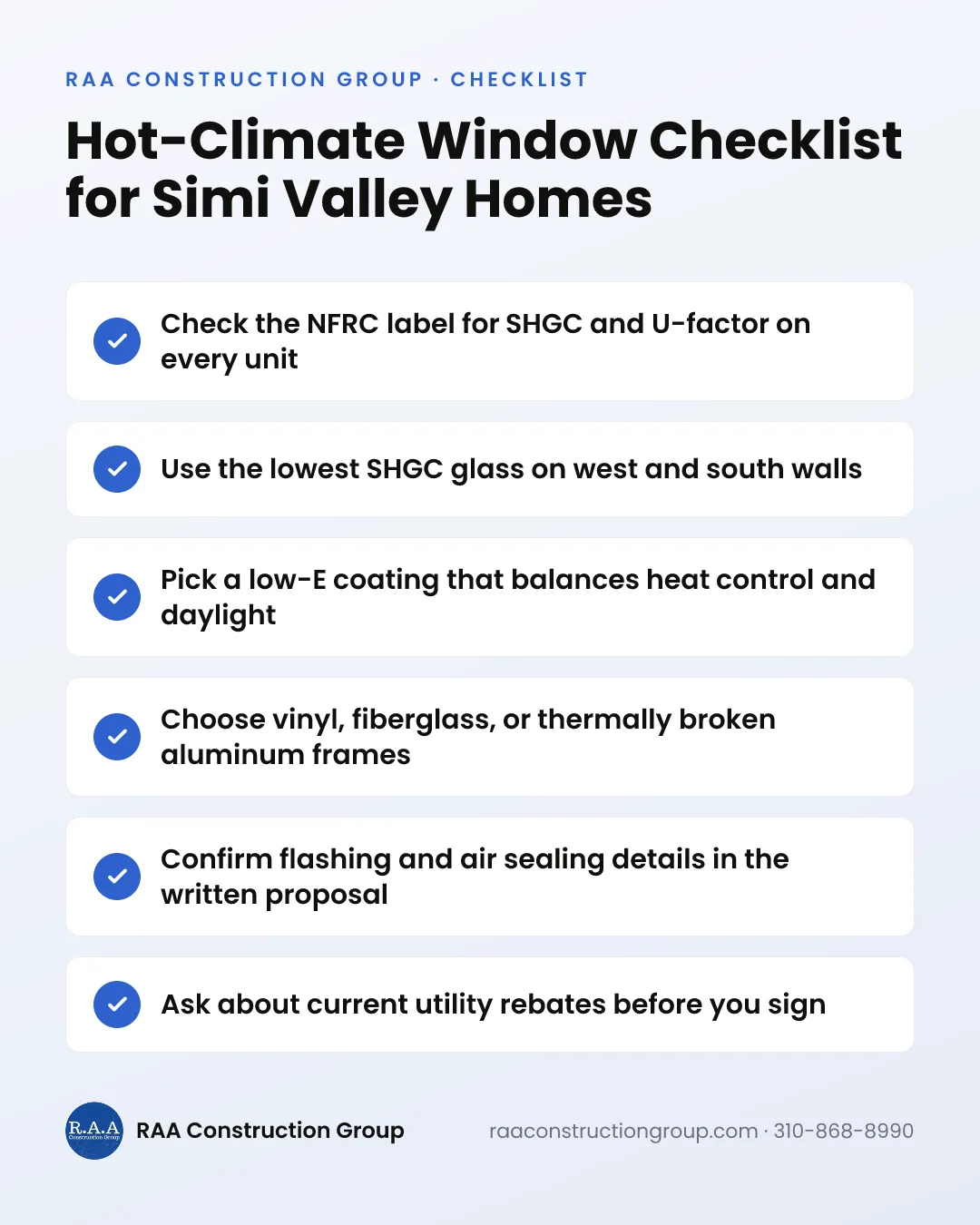
Every certified window carries an NFRC label with standardized ratings. When you compare quotes, compare these numbers, not marketing names.
- Solar Heat Gain Coefficient (SHGC): the share of solar heat that passes through, on a scale of 0 to 1. Lower is better in hot climates, and it is the number that matters most in Simi Valley.
- U-factor: how fast heat conducts through the whole window. Lower is better, on hot afternoons and cold winter nights alike.
- Visible Transmittance (VT): how much daylight gets through. Higher means brighter rooms. Aggressive heat-blocking coatings lower it slightly.
- Air Leakage: listed on many labels. A lower number means a tighter unit.
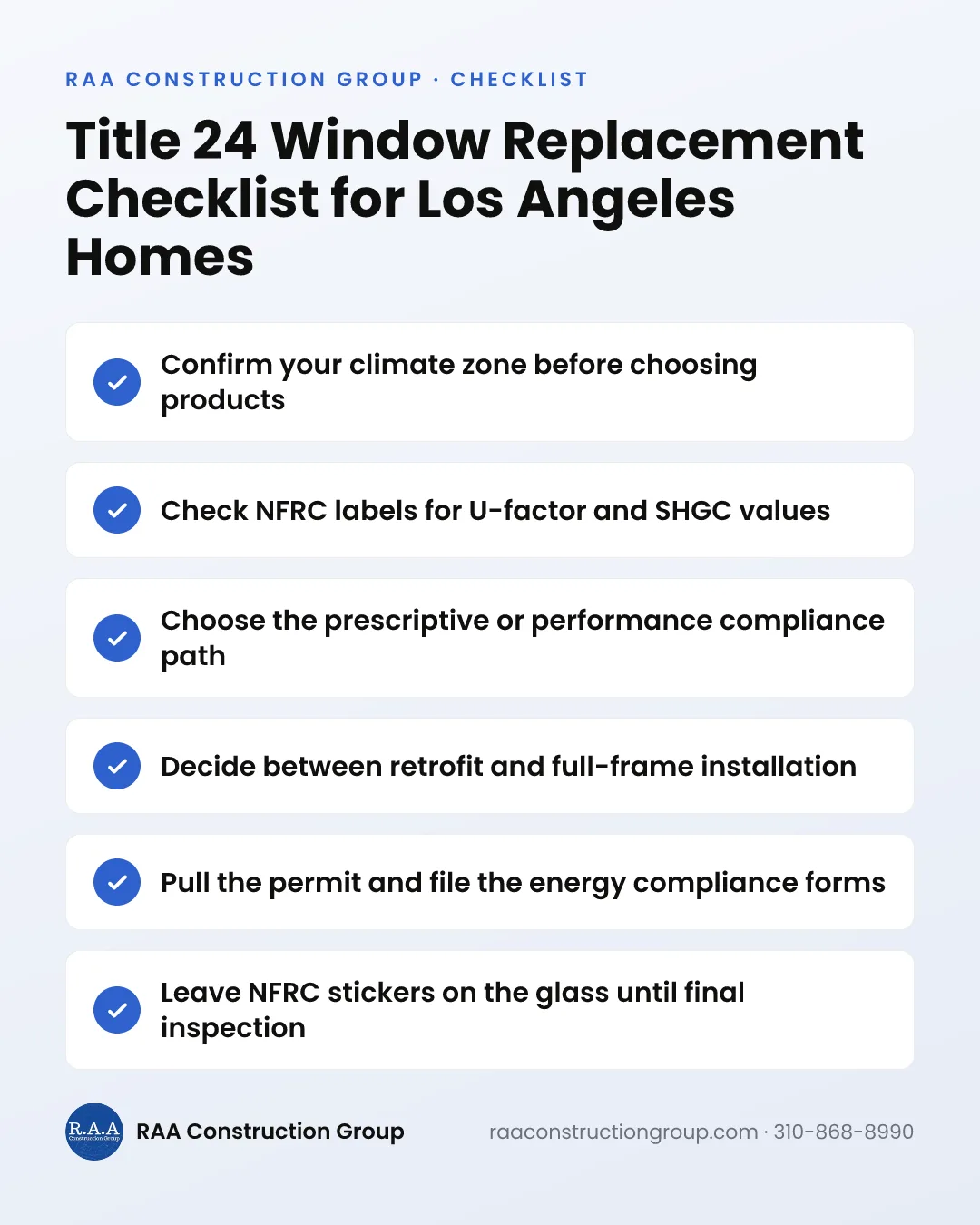
California's Title 24 energy code sets maximum U-factor and SHGC values for replacement windows, so any compliant dual-pane unit is already a big step up from single-pane aluminum. For the code details, read our guide to Title 24 rules for window replacement. Treat code minimum as a floor, not the target for a hot west wall.
Low-E Windows in California: Choosing the Right Coating
Low-E (low-emissivity) is a microscopically thin metallic coating applied to one glass surface inside a dual-pane unit. It reflects infrared heat while letting most visible light through. Nearly every quality window sold in California now includes some low-E coating, so the real decision is which one.
- Double-silver coatings: the common standard. A good balance of heat control and clear daylight for most elevations.
- Triple-silver coatings: block more solar heat, with SHGC ratings often in the low 0.20s or below. The glass can look slightly darker or tinted from outside.
- Argon gas fill: fills the space between panes and modestly improves U-factor at little added cost.
- Triple-pane glass: improves U-factor and sound control but adds weight and cost. In Simi Valley the payoff is mostly comfort and noise reduction, not cooling.
The trade-off is daylight and appearance. A triple-silver coating on a north-facing kitchen window can make the room feel dim without saving much energy, because that glass gets little direct sun.
SHGC for West-Facing Walls: Match the Glass to Orientation
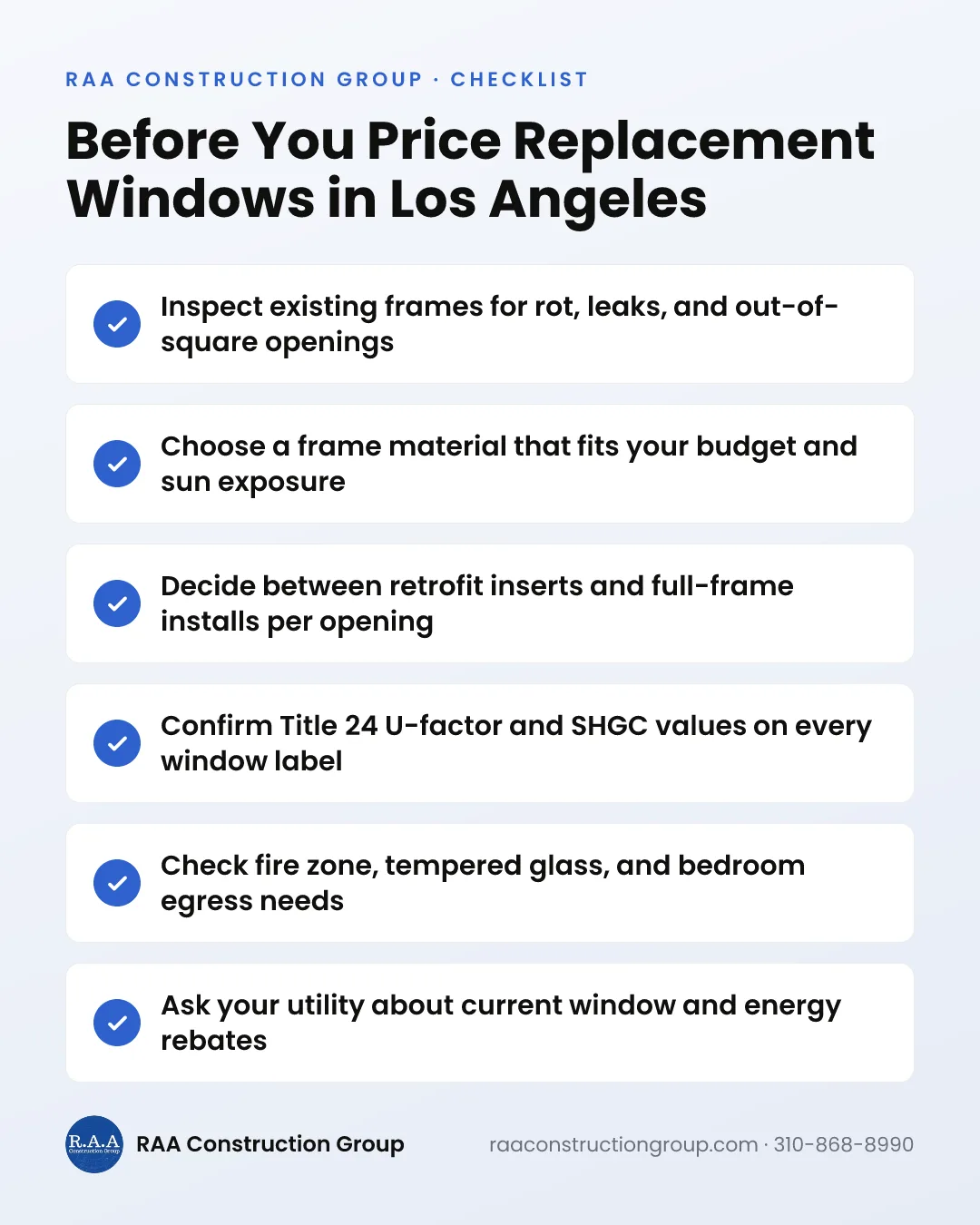
You do not need the same glass on every side of the house. Most manufacturers let you order different coatings window by window, often at a modest price difference. In our projects we usually specify glass by elevation:
- West: the lowest SHGC available, often around 0.20 to 0.25. This is where afternoon sun hits hardest.
- South: low SHGC, though roof overhangs help in summer when the sun sits high.
- East: low to moderate SHGC. Morning sun is milder, but east-facing bedrooms still heat up early.
- North: standard low-E with higher visible transmittance to keep rooms bright.
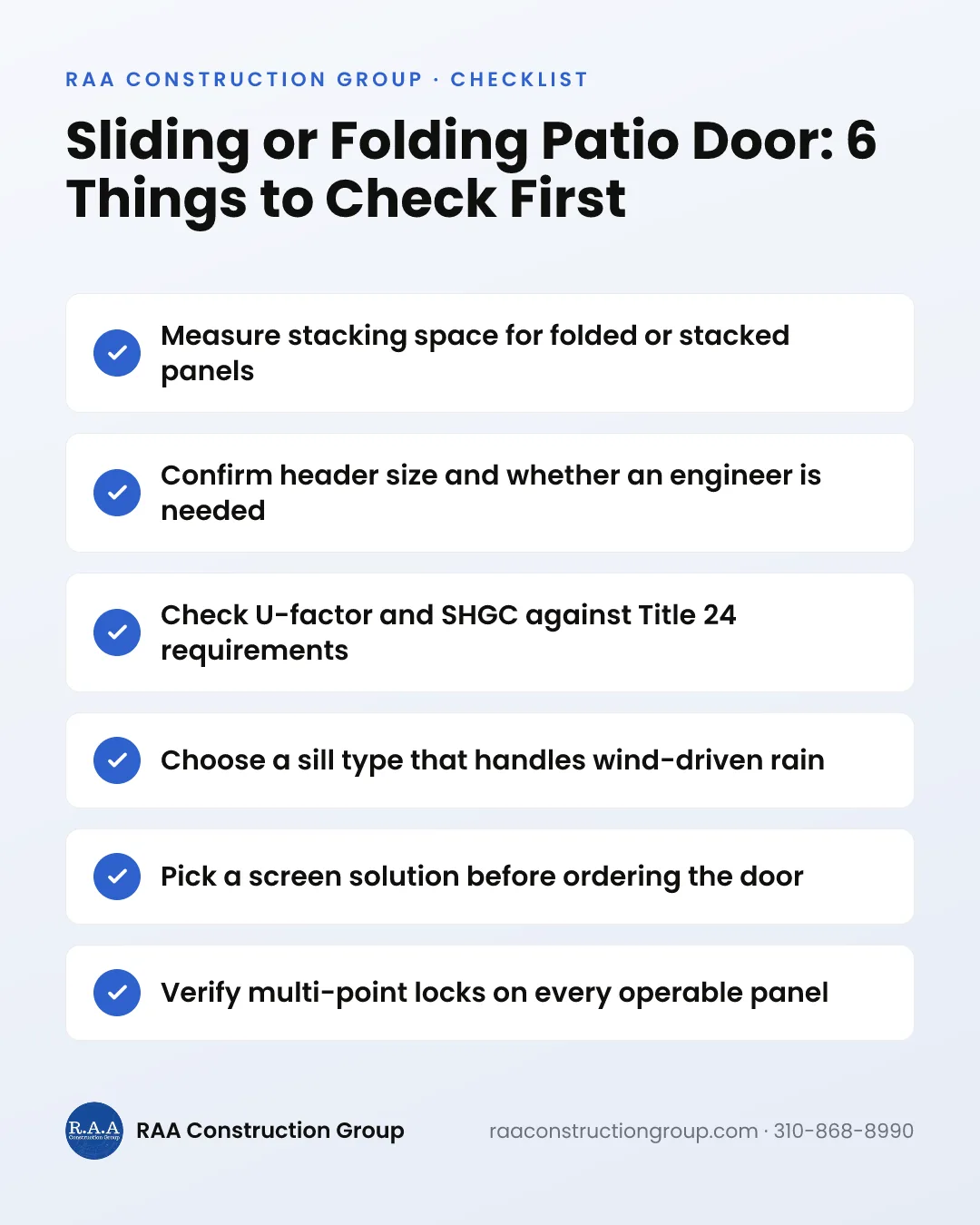
Large sliding doors and picture windows on west walls deserve the most attention, because glass area drives heat gain. If a patio door is part of the project, compare options in our post on sliding vs folding patio doors.
Pair low-SHGC glass with exterior shade where you can. A patio cover, deep overhang, or exterior solar screen stops heat before it reaches the glass, which interior blinds cannot do.
Frame Materials That Hold Up in Valley Heat
The frame is a meaningful share of each window's area and the path for most air leaks. In a climate with big daily temperature swings, how the material expands and contracts matters too.
- Vinyl: the most common choice in Simi Valley window replacement. Insulates well, needs little maintenance, and offers the best value. Some manufacturers restrict dark exterior colors on hot exposures because of heat expansion, so read the warranty terms.
- Fiberglass: expands at a rate close to glass, so seals stay tight through temperature swings. Stronger, slimmer frames that can be painted. Costs more than vinyl.
- Thermally broken aluminum: slim modern sightlines and large openings. The thermal break is essential, since non-broken aluminum is what you are replacing.
- Wood and clad wood: excellent insulation and a classic look, with more maintenance and the highest cost. Often chosen for custom homes in Wood Ranch or on Bridle Path properties.
For most 1970s ranch tracts, a quality vinyl or fiberglass window with the right glass package delivers the bulk of the energy benefit. Spending more on the frame mostly buys durability, appearance, and slimmer profiles rather than a lower bill.
Simi Valley Window Replacement: Retrofit vs Full-Frame Installation
A high-performance window installed poorly still leaks air and water. On the stucco homes common across Simi Valley, there are two main approaches.
- Retrofit (insert): the new frame fits over or inside the existing aluminum frame, then gets sealed and trimmed. Less disruption, lower cost, no stucco work, with a slight loss of glass area.
- Full-frame (new construction): the old frame comes out, a nail-fin window is flashed into the wall, and the stucco is patched and painted. Costs more, but lets you inspect for dry rot, correct flashing, and resize openings.
We choose based on the condition of the existing frames and the wall behind them. On older Simi homes we sometimes find water damage at sill corners, which pushes those openings toward full-frame.
Permits in Simi Valley go through the City of Simi Valley's building department, not LA City or LA County. Our Windows and Doors service includes Title 24 energy calcs, manufacturer-approved flashing, exterior stucco patch, and the permit where required, and every install carries our one-year workmanship warranty.
Ask any contractor how they flash the sill and seal the rough opening, and get the answer in writing. Air leaks around the frame can erase a good part of what a high-performance window saves.
Window Rebates in Southern California and What Payback Looks Like
Window rebates in Southern California come and go, and many programs focus more on HVAC, insulation, and heat pumps than on windows. Simi Valley is served by Southern California Edison, so check SCE and your gas utility for current offerings before you sign. Federal tax credits for windows have changed in recent years, so ask a tax professional whether anything applies to your install.
Be realistic about payback. Energy savings alone rarely pay back a whole-house window project quickly. Your savings depend on your current windows, how often you run the AC, your rate plan, and how much glass faces west.
- You start with single-pane aluminum windows.
- Large sliders or picture windows face west or south.
- You use those rooms in the afternoon and evening.
- Your AC runs long cycles on summer days.
Those conditions give the strongest return. Most clients tell us the bigger payoff is comfort: usable rooms in the afternoon, less furniture fading, and quieter interiors. As a typical Los Angeles-area range, quality vinyl retrofit windows often run roughly $800 to $1,800 per opening installed, with fiberglass, full-frame work, and large openings costing more. Scope and site set the real number, and our breakdown of window replacement cost in Los Angeles explains what drives it.
If you live in Wood Ranch, Big Sky, the Texas Tract, or anywhere in 93063 or 93065, visit our Simi Valley page or schedule a free on-site estimate. We will walk each elevation, check your existing frames, and give you a fixed-price proposal.
Get Windows That Stand Up to Simi Valley Heat
Book a free on-site consultation and receive a fixed-price proposal with the right glass for every wall. Call 310-868-8990.
Schedule a Free EstimateFAQ