Windows & Doors · November 3, 2026 · 7 min read
Window Replacement Cost Los Angeles: What Drives the Price Per Window




If you are pricing new windows, the number that matters is the cost per opening. It can swing by thousands of dollars between two homes on the same street. Window replacement cost Los Angeles homeowners pay depends mostly on three things: the frame material, whether the window is a retrofit insert or a full new construction install, and what happens to the stucco around it.
In our projects across the San Fernando Valley and Ventura County, most homes we see were built in the 1950s through the 1970s with single-pane aluminum sliders. This guide covers typical price ranges, when a retrofit frame is perfectly fine, when cutting stucco is worth it, and which energy rebates to ask about before you sign.
Window Replacement Cost Los Angeles: Typical Price Ranges
The figures below are typical Los Angeles-area ranges for a standard-size window, roughly a 3 by 5 foot slider, installed with trim and caulking. They vary by scope, brand, and site conditions, and they are not quotes.
- Vinyl retrofit insert: about $650 to $1,200 per window
- Fiberglass retrofit insert: about $1,000 to $1,900 per window
- Vinyl full-frame install with stucco cut and patch: about $1,300 to $2,500 per window
- Fiberglass or wood-clad full-frame install: about $1,900 to $3,800 per window
- Sliding patio door replacement: about $3,000 to $8,000
- Large folding or multi-slide door systems: often $12,000 and up, depending on width and structural work
Notice that install type moves the price as much as material does. A vinyl full-frame job can cost more than a fiberglass retrofit, which is why you should decide the install method opening by opening, not just pick a product.
Vinyl vs Fiberglass Windows Cost and Performance
Vinyl is the budget leader and performs well thermally. The trade-offs are wider frames, which mean less glass, and more expansion in heat. On west-facing walls in Woodland Hills or Canoga Park that bake all afternoon, we steer clients toward lighter colors or heat-rated dark finishes.
Fiberglass usually runs about a third to a half more than comparable vinyl in our experience. You get slimmer frames, more glass area, very little movement in heat, and a finish that can be painted later. For homes with large openings or strong sun, it is often worth the difference.
- Vinyl: lowest cost, good efficiency, limited dark colors, wider sightlines
- Fiberglass: mid to upper cost, stable in heat, slim frames, paintable
- Wood or wood-clad: highest cost, best for traditional and historic homes, such as many in Pasadena
- Thermally broken aluminum: premium modern look, very narrow frames, priced near or above fiberglass
We install any brand, so the material choice should come from your house and budget, not from what a single supplier stocks.
Retrofit vs New Construction Windows: The Biggest Price Swing
A retrofit window, often called an insert or flush-fin window, mounts into or over the existing aluminum frame. The stucco and interior drywall stay intact, and a crew can often finish a whole house in one to two days.
A new construction, or full-frame, install removes the old window down to the rough opening. The crew cuts back the stucco, installs a window with a nailing fin, laps manufacturer-approved flashing into the weather barrier, then patches the stucco and repaints. That process takes one to two weeks for a typical home because stucco needs time to cure before paint.
The extra cost of full-frame work is mostly labor: demolition, flashing, stucco, paint, and sometimes interior drywall and trim. The payoff is a properly integrated water barrier and the chance to fix whatever is hiding behind the old frame.
When Retrofit Frames Are Fine and When Stucco Must Be Cut
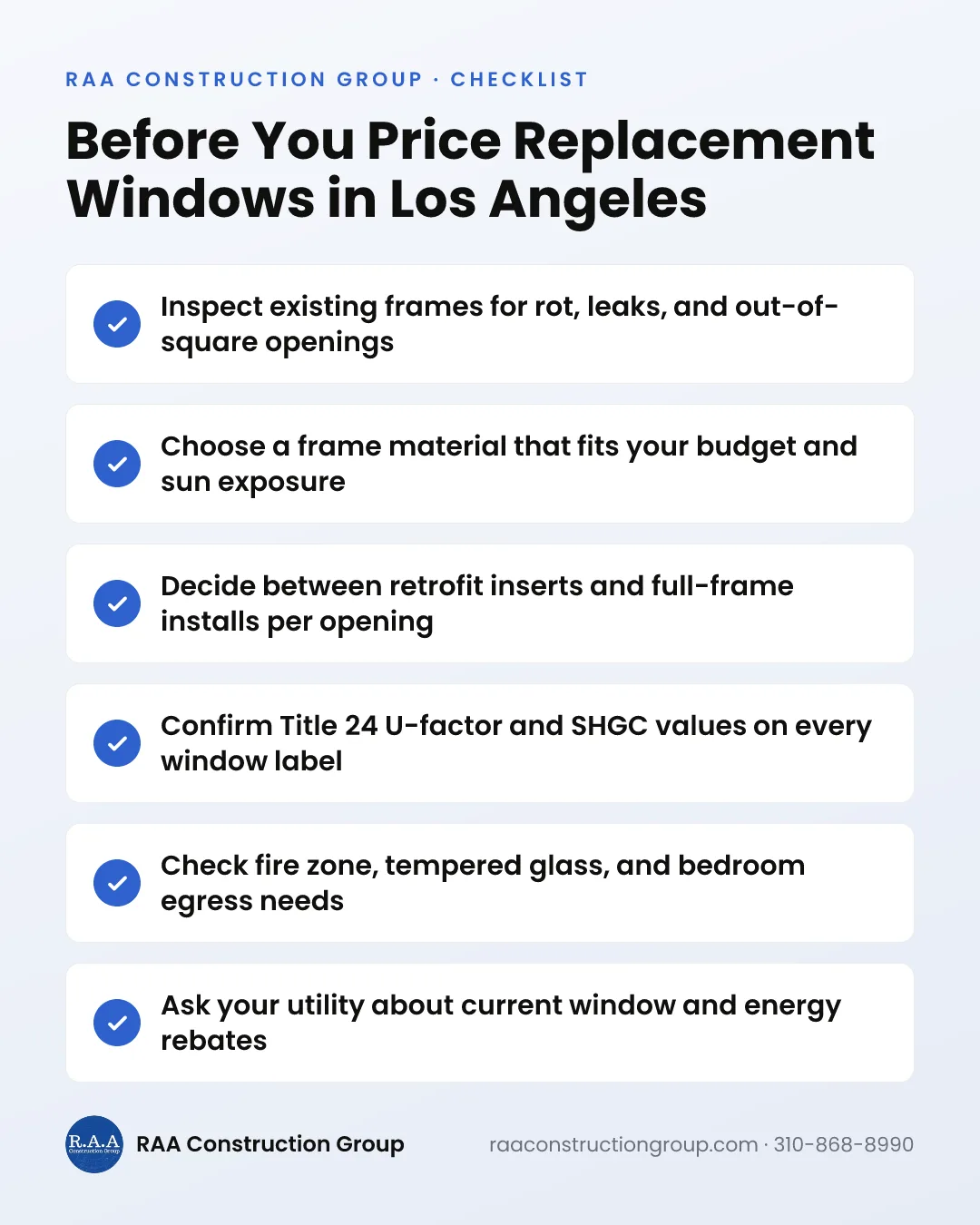
Retrofit is the right call for most Valley homes with original aluminum windows, as long as the old frame is sound. We check every opening before recommending one approach.
- Retrofit works when the old frame is solid, square, and not leaking
- Retrofit works when you are keeping the same opening size
- Retrofit works when the stucco is in good shape and you want minimal disruption
- Retrofit works when you can accept losing roughly an inch or two of glass on each side
Cutting stucco is worth it, and sometimes unavoidable, in these situations:
- Water stains, soft drywall, or rot below the sill, which means the original flashing failed
- Wood-framed windows that have rotted, common in some 1940s and 50s homes
- Changing the opening size, adding a window, or converting a slider to a folding door
- Bedroom windows that must be enlarged to meet egress size
- Frames so out of square that an insert cannot be sealed properly
Ask your contractor to probe the sill and the drywall under any window with past staining. Installing a retrofit over hidden water damage traps the problem and voids the point of the upgrade.
Other Factors That Move the Price Per Window
Beyond material and install type, these details add up quickly on a quote.
- Size and shape: picture windows, arched tops, and bays cost more than standard sliders
- Tempered glass: required near doors, tubs, showers, and close to the floor
- Fire zone: homes in Very High Fire Hazard Severity Zones, common in Calabasas, Agoura Hills, and hillside areas, need Chapter 7A compliant windows, typically dual-pane with at least one tempered pane
- Access: second-story openings and steep hillside lots add labor
- Glass options: Low-E coatings, laminated glass for sound, and grids
- Older homes: pre-1978 houses call for lead-safe work practices during removal
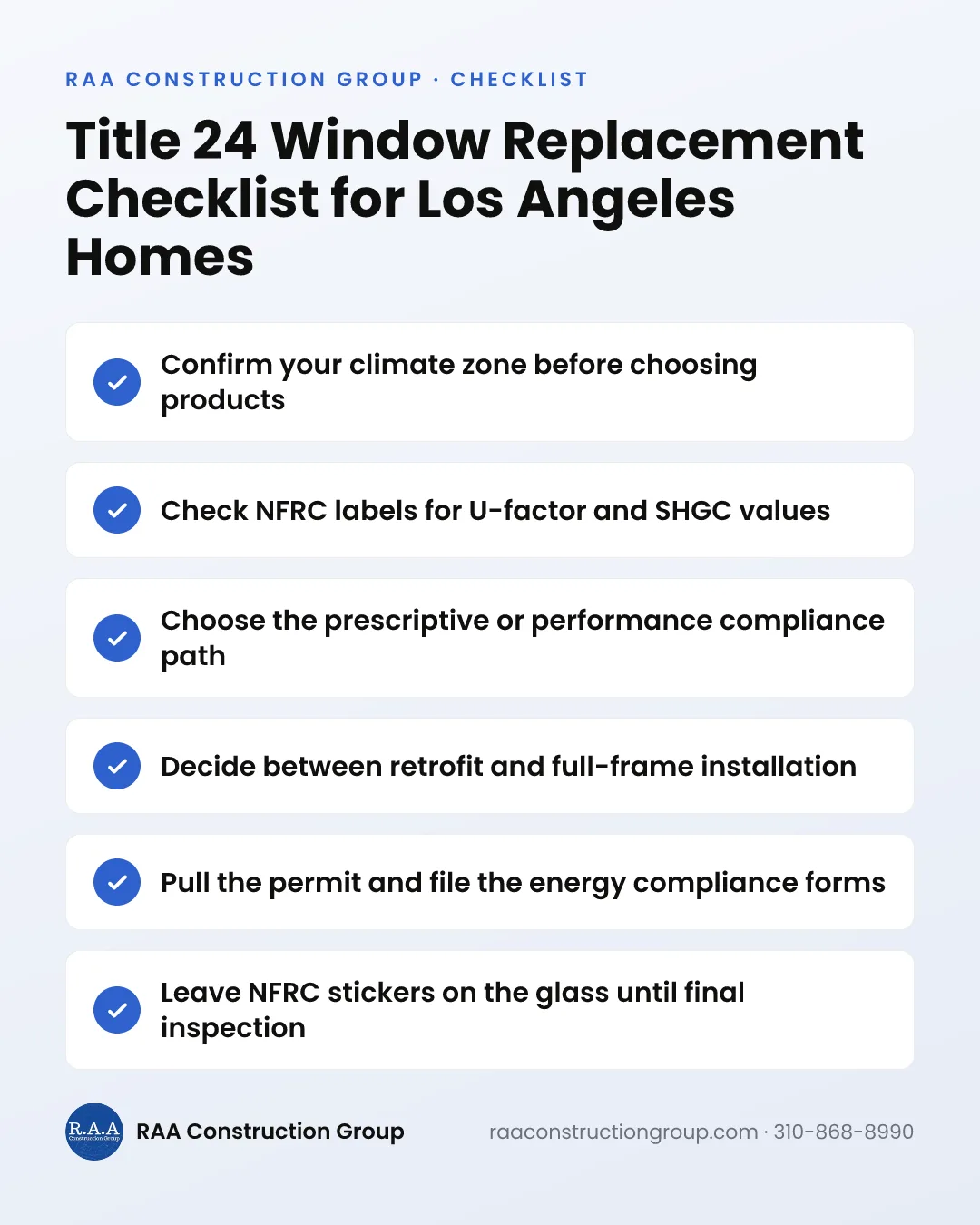
Permits and energy rules also apply. In the City of Los Angeles, replacement windows usually need an LADBS permit, and other cities handle this through their own building department. Every window must meet Title 24 energy requirements, which we cover in detail in our guide to Title 24 window replacement rules.
Whole House Window Replacement Price: How to Budget
A typical 1,600 square foot Valley ranch has about 14 windows plus one sliding door. Using the ranges above, here is how a whole house window replacement price can land. These are typical Los Angeles-area ranges, not quotes.
- Vinyl retrofit throughout: roughly $12,000 to $22,000
- Fiberglass retrofit throughout: roughly $18,000 to $34,000
- Fiberglass full-frame with stucco patch and paint: roughly $32,000 to $60,000
Many clients choose a hybrid. Retrofit the sound openings, go full-frame only where there is damage or a size change, and save the difference for a better door. When you compare bids, make sure each one lists the same items.
- 1Confirm the exact product line, glass package, and color for each opening
- 2Check whether each opening is retrofit or full-frame
- 3Look for flashing method, stucco patch, and paint in writing
- 4Verify permit, Title 24 documentation, and haul-away are included
- 5Compare warranty terms for both the product and the labor
Our proposals are fixed-price and line-itemed by opening, and our windows and doors service includes a one-year workmanship warranty on top of the manufacturer warranty.
Energy Rebates and Credits to Ask About
Rebates rarely cover a large share of the project, but they are worth a phone call. Programs change often, so check what is active when you sign, not what a neighbor got two years ago.
- Your electric utility: LADWP inside the City of Los Angeles, Southern California Edison in much of the rest of the region, or a municipal utility such as Pasadena Water and Power
- Income-qualified or whole-home efficiency programs, which sometimes include windows
- ENERGY STAR certification for your climate zone, which many programs require
- Federal tax credits, which have changed recently, so ask a tax professional what applies
Keep the NFRC labels, product invoices, and Title 24 paperwork from your project. Most rebate and credit programs ask for them, and they are hard to recreate later.
If you live in the San Fernando Valley or Ventura County and want real numbers for your house, schedule a free on-site estimate and we will measure every opening and recommend retrofit or full-frame for each.
Get a Fixed-Price Window Quote for Your Home
We measure every opening, recommend retrofit or full-frame for each, and give you a line-itemed proposal. Call 310-868-8990 or book a free consultation.
Schedule a Free EstimateFAQ